Cutting rooms: design, regulations, and workflow in the meat industry

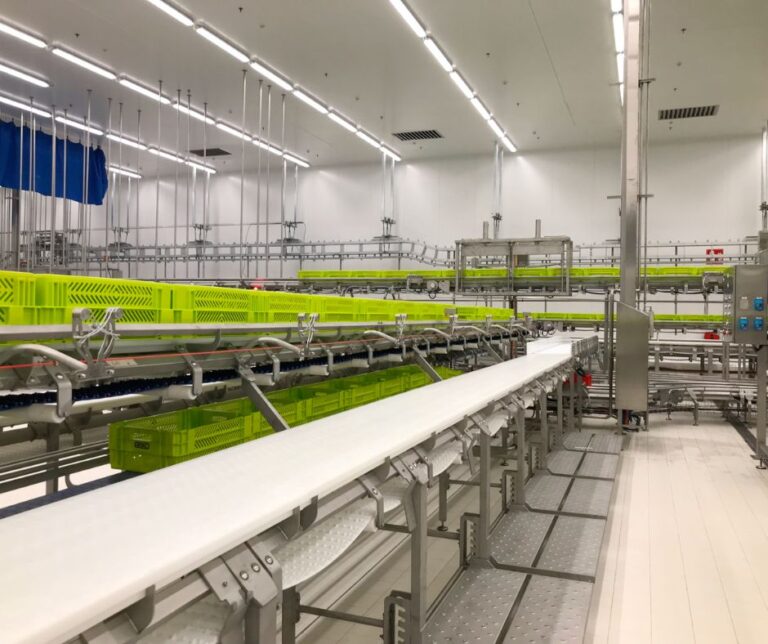
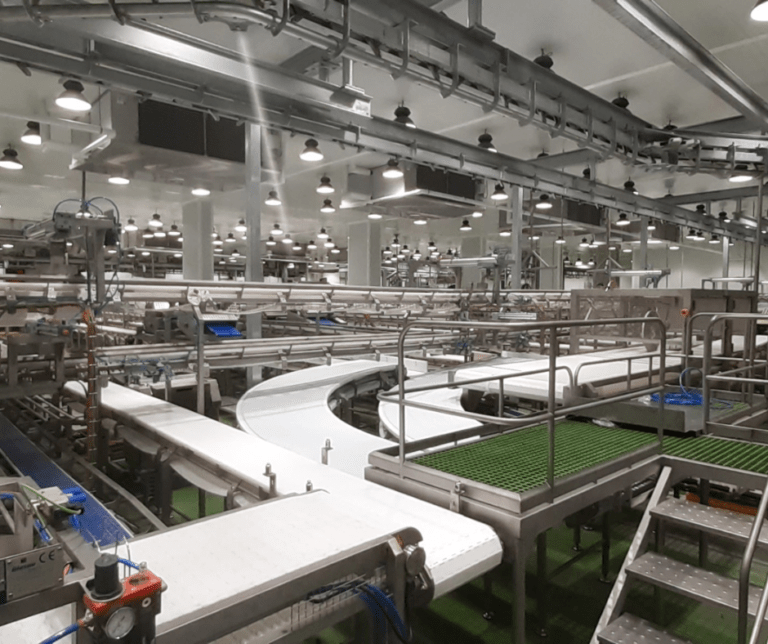
Cutting rooms are a key component of the modern meat industry. They are where carcasses are transformed into commercial cuts, a process that demands maximum hygiene, operational efficiency, and regulatory compliance. Proper design not only improves productivity but also guarantees food safety and the final product’s quality.
In this article, we address what cutting rooms are, how they should be designed, and what requirements they must meet, with special attention to beef and pork cutting rooms, industrial hygienic design, health regulations, and the cutting workflow.
What is a cutting room?
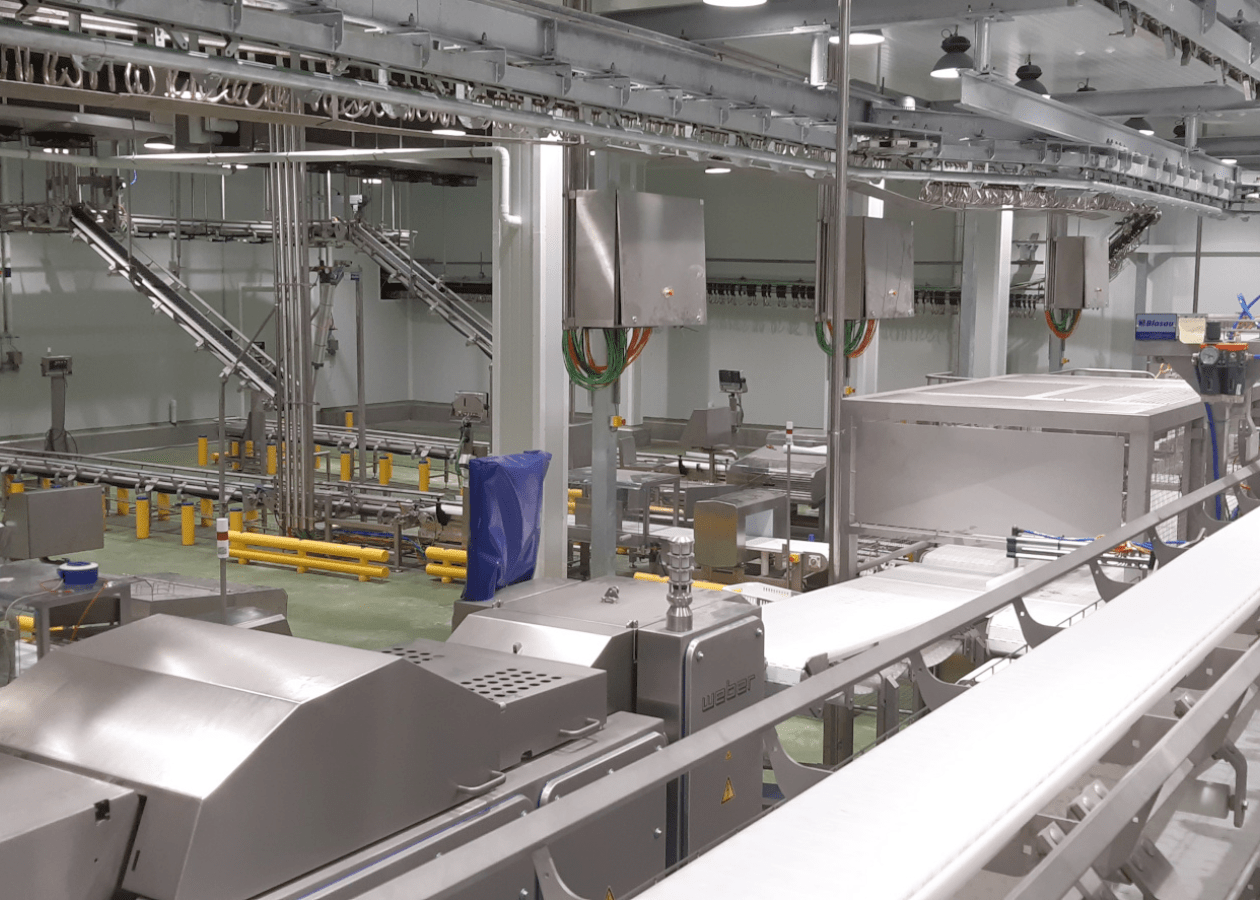
A cutting room is the industrial area where, after slaughter and carcass refrigeration, the operations of cutting, deboning, classifying, and preparing the meat are carried out for subsequent packaging or distribution.
These facilities are part of the production process of:
- Slaughterhouses
- Meat processing rooms
- Fresh and processed product manufacturing plants
Its correct planning is crucial to ensure traceability, hygiene, and efficiency.
Beef and pork cutting rooms: key differences
Although they share common principles, beef and pork cutting rooms have relevant technical differences:
Beef cutting rooms
- Carcasses of greater weight and size
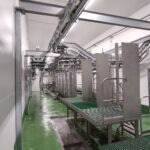
- Need for robust structures and high-load overhead rails
- Greater workspace per operator
- More specific cutting processes according to the type of piece
Pork cutting rooms
- More continuous production and high rates
- More automated transport systems and lines
- Space optimization for high volumes
- Integration with classification and packaging lines
A specialized design allows adapting the installation to the type of animal and the volume of production.
Industrial hygienic design in cutting rooms
Industrial hygienic design is a fundamental pillar in any cutting room. Its objective is to avoid cross-contamination and facilitate cleaning and disinfection.
Key principles of hygienic design:
- Use of food-grade stainless steel
- Smooth surfaces, without dead angles or accumulation areas
- Open and accessible structures for cleaning
- Adequate drainage and correct slopes
- Clear separation between clean and dirty areas
A correct hygienic design reduces health risks and maintenance times.
Health regulations in cutting rooms
The cutting rooms must comply with strict health regulations, both at the European and national level. Among the main regulatory frameworks are:
- European food hygiene regulations (Hygiene Package)
- HACCP systems (Hazard Analysis and Critical Control Points)
- Traceability and temperature control requirements
- Cleaning and disinfection protocols
The design of the installation must facilitate regulatory compliance, avoiding costly subsequent modifications.
Cutting workflow: key to efficiency
A well-defined cutting workflow improves productivity and minimizes risks. The objective is for the product to always move forward, without unnecessary crossings.
Essential elements of the workflow:
- Entry of the refrigerated carcass
- Transport by overhead rails
- Differentiated cutting and deboning areas
- Classification and preparation of pieces
- Exit to packaging or shipping
The correct distribution of equipment and workstations reduces times, errors, and overexertion of personnel.
Blasau solutions for cutting rooms
Blasau designs and manufactures custom cutting rooms, adapted to the needs of each client and type of production. Its solutions include:
- Engineering and integral design of the installation
- Equipment and structures in stainless steel
- Overhead rails and transport systems
- Integration with slaughter and processing lines
- Turnkey projects
Blasau’s approach combines functionality, hygiene, and durability, guaranteeing efficient facilities prepared for the future.
Frequently Asked Questions
What regulations must a cutting room comply with?
It must comply with European health regulations on food hygiene, HACCP systems, temperature control, and traceability.
What is the difference between a beef and pork cutting room?
Mainly the size of the carcasses, the production rate, and the level of automation required.
Why is industrial hygienic design important?
Because it reduces the risk of contamination, facilitates cleaning, and guarantees food safety.
How is the workflow optimized in a cutting room?
Through a linear design, without crossings, with efficient transport and clearly differentiated areas.
Does Blasau design custom cutting rooms?
Yes, Blasau develops personalized solutions according to species, production volume, and customer requirements.